Lumina: Scripture & Bible
WiseWakeTechBooks & Reference
4.5881.00 Reviews
- Version
- 1.3.6
- Installs
- 100.00K
- Age Rating
- Everyone
Screenshots
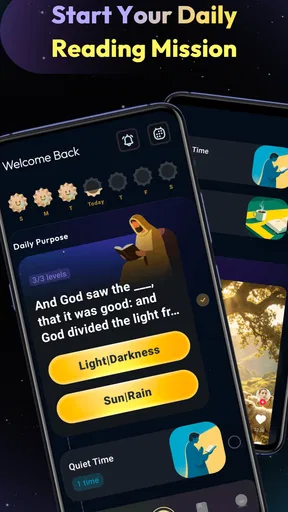
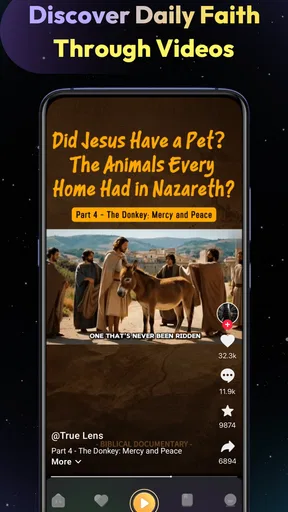
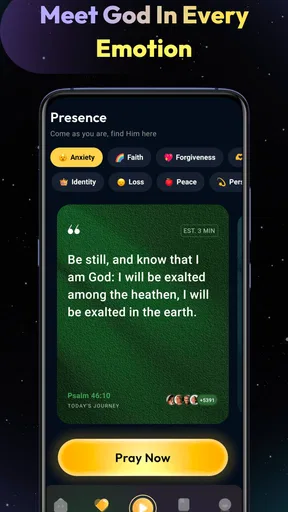
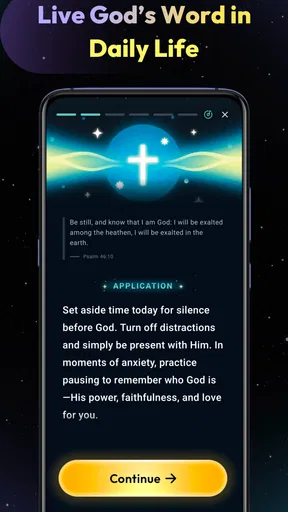
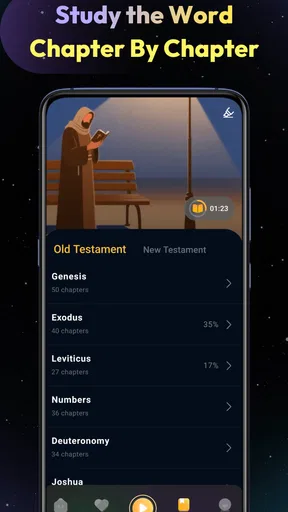
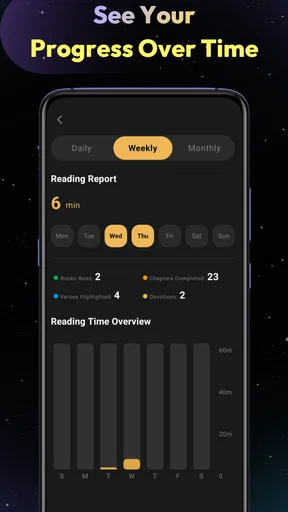
Our Review of Lumina: Scripture & Bible
 Analysis by Appyee
I opened Lumina: Scripture & Bible looking for a calmer way to bring Bible reading into an ordinary day, rather than another app that simply asks me to scroll through a large block of text. Its promise is simple: read, reflect, pray, and grow. In practice, I found that its value depends less on replacing a printed Bible or a full study tool and more on how well it fits into a small, repeatable routine.
Developed by WiseWakeTech, Lumina sits in the Books & Reference category and is available free of charge for everyone. It has reached over one hundred thousand installs and holds a 4.7 average from around two thousand ratings, which suggests that the basic idea is connecting with a broad group of readers. The app is available on Android devices running version 8.0 or later, and the current release is version 1.2.0.
From a busy moment to a focused reading habit
The best way to understand this app is to follow a realistic use case. Imagine I have ten minutes before work. I do not want to search the web, compare translations, or decide which book to open. I want a short pause that moves naturally from reading into personal reflection and prayer. That starting condition is where Lumina makes the most sense.
I can also picture using it at night, when a physical Bible is not within reach, or during a commute when I want a quiet reading prompt rather than entertainment. It is especially suitable for someone beginning a Bible-reading habit, because the app lowers the effort needed to start. The important distinction is that it helps create a doorway into Scripture; it should not automatically be treated as a replacement for every kind of Bible study.
My first practical tip is to choose one consistent moment instead of opening the app only when I feel unusually motivated. A short session after breakfast or before bed gives the app a job in my day. That approach is more useful than expecting Lumina itself to create discipline. The app can support the routine, but the routine still comes from me.
Beginning with the reading rather than the search
The opening experience is most useful when I approach it with a specific purpose. If I want a quick devotional pause, I can begin with the available reading experience and give it my full attention. If I am trying to locate a particular passage or investigate a theme, I need to think more like a study reader and less like someone browsing a social feed.
That difference matters. A reference app is judged by how quickly it helps me find exact information, while a reflective Bible app is judged by whether it helps me stay with what I have found. Lumina leans toward the second use. I would recommend it to a reader who wants a gentle entry point, but I would not make it my only tool for detailed comparison, academic research, or serious cross-referencing.
A useful workflow is to read once without interruption, then read again more slowly. On the second pass, I can note a phrase that stands out, consider what it says in context, and turn that thought into a short prayer. This three-stage rhythm is more practical than trying to absorb everything in a single hurried visit.
Turning a passage into reflection
The handoff from reading to reflection is where many apps become either too shallow or too demanding. Lumina’s central appeal is that it encourages me to make that transition instead of ending the experience at the last line of a passage. I found the most benefit when I asked one concrete question: what does this reading invite me to notice about my attitude, decision, or relationship today?
That question keeps reflection grounded. It prevents the session from becoming a vague feeling of inspiration, while also avoiding the pressure to produce a long written study. For a beginner, this is a manageable way to connect Scripture with daily life. For an experienced reader, it can serve as a brief reset between longer study sessions.
There is also a trade-off here. A guided reflective flow can make it easier to begin, but it may feel limited when I want deeper historical background, original-language detail, maps, extensive notes, or multiple translations side by side. Those needs are better served by a dedicated study Bible or a more research-oriented Bible application. Lumina is strongest when the desired outcome is attention and consistency, not exhaustive analysis.
Moving from reflection into prayer
The next handoff is personal rather than technical: reading becomes prayer. I found it helpful to avoid writing or thinking a prayer that is too broad. Instead, I can respond directly to the passage, mention one concern, and identify one action I want to carry into the day. That makes the session feel complete without turning it into a performance.
For example, if a reading challenges patience, I might connect it to a difficult conversation waiting for me at work. The result is not that the app solves the conversation. The result is that I enter it with a clearer intention. This is one of the more useful ways to judge Lumina: by the quality of the handoff from screen to real life.
My second practical tip is to end each session with a single sentence I can remember after closing the app. A short takeaway is easier to carry than a collection of unfinished thoughts. It also gives the next session a natural starting point, because I can check whether that idea affected my choices during the day.
Where the app fits beside familiar alternatives
Compared with a printed Bible, Lumina is more convenient when I already have my phone nearby and want a guided pause without carrying another item. The printed book still wins for people who prefer a distraction-free page, physical annotations, or a slower sense of place within the whole text. I would not recommend abandoning a paper Bible if that tactile experience is central to your reading.
Compared with a general-purpose Bible app, Lumina feels more focused on the devotional journey. A larger Bible platform may be better for searching across passages, comparing translations, following extensive reading plans, or consulting study resources. Lumina is a better fit when those extra layers would make a short daily session feel like homework.
Compared with reading Scripture in a browser, the app offers a more intentional destination. A browser can be faster for a one-off lookup, but it also makes it easy to drift into unrelated tabs and notifications. Lumina’s value is partly behavioral: opening a dedicated reading space can create a clearer boundary around the moment.
That boundary is not perfect. The experience still takes place on a phone, so incoming alerts, battery concerns, and the temptation to switch apps remain real friction. Anyone who needs a completely offline, paper-like environment may prefer a physical Bible. Anyone who wants a powerful reference library may find a broader Bible tool more efficient.
What happens after the session
The immediate result of using Lumina is not a dramatic transformation. It is a completed pause: I have read something, considered it, and responded in prayer. That modest outcome is precisely why the app can be useful. A routine made of short, repeatable sessions is often more realistic than an ambitious plan that I abandon after a few days.
I would use it as a starting point for a morning routine, a quiet evening check-in, or a way to return to Scripture during a stressful week. It may also work well for a person who feels intimidated by the size of the Bible. The app gives that reader a smaller next step, which can be enough to turn uncertainty into action.
For group settings, the handoff is more manual. I can read personally, then bring a passage or reflection into a conversation with friends, family, or a study group. Lumina may support the personal preparation, but the shared discussion still depends on people carrying the idea beyond the app. That is not necessarily a weakness; it simply clarifies what the product is best at.
My third practical tip is to use the app before a conversation rather than during one. Reading and reflecting beforehand can help me arrive with a question or a personal connection instead of expecting a phone screen to replace discussion. The app becomes a preparation tool, while the actual relationship remains the important part.
When the flow breaks down
The workflow can break when I expect the app to do too much of the spiritual work for me. No reading interface can guarantee concentration, understanding, or a meaningful prayer. If I open it mechanically while multitasking, the session can become another item to check off. Lumina works better when I give it a defined window, even if that window is brief.
It can also break when my goal is precision rather than reflection. Someone preparing a sermon, tracing a theme across many books, checking wording between translations, or studying context in depth will probably need another resource alongside it. Lumina may still be a pleasant devotional companion, but it should not be mistaken for a complete research environment.
Another limitation is the natural tension between simplicity and control. A streamlined app is less intimidating, yet readers who want to customize every part of their study may find the experience less satisfying than a feature-heavy alternative. That is a fair trade-off, but it means the right choice depends on whether I value a low-friction routine or a large set of tools.
The age rating of Everyone makes Lumina approachable for a wide audience, including families deciding whether a straightforward Bible-reading app is suitable for shared use. Even then, younger readers may benefit from a parent or teacher helping explain difficult passages. The app can open the conversation, but it cannot provide every layer of guidance a child may need.
Who should install it, and who should skip it
I would recommend Lumina to a new Bible reader, someone rebuilding a daily habit, or anyone who wants a focused devotional moment without paying for access. Its free price removes an obvious barrier, and the simple reading-to-reflection-to-prayer flow gives the app a clear purpose. It is also a sensible choice for people who prefer a gentle routine over a dense collection of study controls.
I would be more cautious about recommending it as a sole Bible resource to pastors, students, researchers, or highly experienced readers who depend on extensive references. Those users may be happier with a study Bible, printed reference materials, or a more comprehensive Bible application. I would also suggest skipping it if phone-based reading itself is distracting or if the main goal is long, uninterrupted reading away from screens.
The release is still relatively new, with the app introduced on January 9, 2026, so I would approach it as a developing tool rather than a finished replacement for every established Bible resource. The current version, 1.2.0, is a reasonable point at which to try the central experience and decide whether it fits my routine. I would judge it by consistency and usefulness, not by expecting a single session to answer every need.
My final view after following the complete workflow
Lumina succeeds when the starting problem is simple: I want to read Scripture, pause long enough to reflect, and carry a prayer into the rest of the day. Its strongest feature is the connection between those stages. The app gives the session a shape, and that shape helps prevent reading from becoming a quick glance with no personal response.
Its limitations are equally clear. It is not the best choice for deep research, extensive customization, or people who want to avoid screens. The experience also depends on my willingness to slow down; the app can guide the handoff, but it cannot make me attentive. That balance keeps the review positive without pretending that a devotional tool can replace a complete study library or a human community.
For me, the best outcome is a small habit that survives busy days. I can open Lumina when I need a clear starting point, read with a specific question, turn one insight into prayer, and close the app with one action in mind. That practical bridge from a short reading session to an intentional next step is the reason I would recommend Lumina to a friend.
Privacy and Permissions
See what permissions an app requests and how it handles your data.
- Wi-Fi connection information
- view Wi-Fi connections
- Other
- view network connections, full network access, draw over other apps, control vibration, prevent device from sleeping, Google Play license check
Verdict
Strengths of Lumina: Scripture & Bible
- Clean, calming design makes daily Bible reading feel inviting.
- Helpful search tools make finding verses and topics quick.
- Personal notes and highlights support a more meaningful study routine.
- Reading reminders can encourage consistent Scripture engagement.
- Useful for both quiet personal reflection and structured devotional time.
Limitations of Lumina: Scripture & Bible
- Some features may require a paid subscription or in-app purchase.
- The app may feel limited for users seeking extensive study commentaries.
- Audio or reading features can depend on a stable internet connection.
- Personalization options may not be as extensive as in larger Bible apps.
- Users may need to verify translation availability for their preferred version.
Other Releases by WiseWakeTech
View All
Ember: Walk With God
Books & Reference4.5
Similar Picks in This Category
View All
Google Play Books & Audiobooks
Google LLC4.7

네이버 - NAVER
NAVER Corp.3.5

Wattpad - Read & Write Stories
Wattpad.com3.7

King James Bible - Verse+Audio
Ozion4.8

Bible Offline-KJV Holy Bible
Bíblia Offline4.9

Amazon Kindle: Reading App
Amazon Mobile LLC4.8
Frequently Asked Questions
What is Lumina: Scripture & Bible, and what can I use it for?
Lumina: Scripture & Bible is a Bible-focused app designed for reading Scripture, exploring biblical passages, and supporting personal reflection or devotional habits. Depending on the version and platform, it may include reading tools, search, bookmarks, highlights, notes, daily content, and guided study features. It is best suited to users who want convenient access to Bible material on a phone or tablet rather than relying only on a printed Bible.
Does Lumina: Scripture & Bible work offline?
Offline availability can depend on the app version, translation, and content downloaded to your device. Some Bible apps allow selected books or translations to be saved for offline reading, while other features—such as synchronization, recommendations, audio, or AI-based tools—may require an internet connection. Before traveling or using the app without mobile data, open the settings and confirm which resources can be downloaded and accessed offline.
Is Lumina: Scripture & Bible free to download and use?
The app may be available as a free download, but some features or resources can be restricted by in-app purchases or a subscription. Premium access may include additional translations, study materials, audio content, personalization, or advanced tools. Check the listing for your Android or iOS device carefully, including the trial terms, renewal price, and cancellation policy, before starting any subscription.
Can I use Lumina: Scripture & Bible for serious Bible study?
Lumina can be useful for regular reading, verse lookup, devotional routines, and organizing personal notes, but it should not automatically be treated as a complete academic study platform. The usefulness of its study tools depends on the available translations, commentaries, cross-references, and search functions. For theological research, compare its content with a trusted printed Bible, reputable scholarly resources, and guidance from qualified teachers.
Does Lumina: Scripture & Bible protect my notes and personal data?
If the app allows accounts, notes, highlights, prayer entries, or reading progress, some of that information may be stored locally, synchronized online, or connected to your account. Review the app’s privacy policy and permissions before entering sensitive personal information. Also check whether deleting the app removes local data and whether cloud-synchronized content can be exported or deleted separately.
